Introduction
Manufacturing success relies on choosing the right equipment which combines efficiency with reliability. Pneumatic presses deliver everything manufacturers need while keeping costs under control. These machines run on compressed air and revolutionize how companies handle forming, stamping, and assembly work across different industries.
Modern production lines demand faster cycles, minimal downtime and consistent quality from their machines. Pneumatic technology addresses these demands via compressed air, pneumatic press machines which deliver force through compressed air systems – creating a cleaner and more responsive manufacturing environment.
What are Pneumatic Presses?
A pneumatic power press works simply. Compressed air flows into a cylinder and pushes a piston that creates force. This force then shapes, forms, or assembles materials with precision. The system includes several key components:
- A compressor that pressurizes air to required levels
- A reservoir that stores compressed air for consistent supply
- Control valves that regulate pressure and timing
- Cylinders and pistons converts air pressure into mechanical force
- Safety mechanisms protects operators and equipment
What makes this technology compelling is its responsiveness. When operators adjust valve settings, the press reacts instantly. This immediate response enables rapid cycling, which proves essential in high-volume production environments where every second counts.
The power press machines category has expanded significantly, but pneumatic variants maintain a unique position. They fill the gap between manual presses that require excessive operator effort and hydraulic systems that demand substantial infrastructure investment.
Key Advantages of Pneumatic Press Machines
Lightning-Fast Cycle Times
Production speed directly impacts profitability. Pneumatic presses complete cycles faster than many alternatives because compressed air responds more quickly than hydraulic fluid. This speed advantage becomes particularly valuable in assembly operations where workers perform hundreds of repetitions daily.
The automotive sector demonstrates this advantage clearly. When pressing components for vehicles, the ability to complete each operation in seconds rather than minutes multiplies daily production capacity. Assembly lines maintain their rhythm without waiting for slower equipment to catch up.
Exceptional Precision and Control
Quality manufacturing demands consistent force application. Pneumatic press machines excel at producing repeatable pressure levels across thousands of cycles, and operators can fine-tune pressure settings according to specific materials or applications – guaranteeing each piece meets exact specifications.
This precision matters especially when working with sensitive materials. Electronics assembly for instance demands controlled force which does not damage delicate components. And an air-powered press allows for exact control over applied pressure, making it ideal for jobs requiring precise and consistent outcomes.
The control systems on modern pneumatic presses include regulators, sensors, and valves which manage speed, force and timing. All the above components work together to eliminate the variations which cause rejected parts and rework costs.
Lower Operational Costs
Budget considerations influence every equipment decision. Pneumatic presses offer compelling financial advantages throughout their lifecycle. The initial investment for pneumatic systems remains significantly lower compared to fully hydraulic alternatives, making them accessible for businesses of various sizes.
Compressed air systems boast low operational costs beyond purchase price; energy consumption is significantly less than that used by high-voltage hydraulic pumps, maintenance requirements are minimal due to their simple mechanical design with few moving parts that could fail and the absence of hydraulic fluid means no risk for contamination, no fluid changes and no disposal fees.
These savings compound over years of operation. Pneumatic systems deliver the strongest return on the investment from light to medium-duty applications when manufacturers calculate total cost of ownership.
Simple Maintenance Requirements
Production stops when equipment fails. Using pneumatic presses helps minimize this risk through the inherently reliable design. Maintaining pneumatic press needs simple tasks like checking air filters, lubricating components, and inspecting seals periodically.
Compare this to hydraulic systems that require monitoring fluid levels, checking for leaks, and maintaining pumps. The maintenance schedule becomes simpler, and plants maintain higher equipment availability. Basic mechanical skills suffice for most maintenance tasks, lowering training requirements and making it easier to keep equipment running across shifts.
Enhanced Workplace Safety
Workplace safety remains non-negotiable. Industrial pneumatic presses contain built-in safety features to ensure secure operations:
- Guard systems that prevent hand entry during operation
- Two-hand controls that require deliberate activation
- Emergency stop mechanisms for immediate shutdown
- Pressure relief valves to prevent system overload
The absence of high voltage electrical systems decreases the risk of shock. The absence of hydraulic fluid pressurized reduces the risks of injury from injection of fluid. The operators find pneumatic systems more comfortable to use compared to manual presses that can result in repeated stress injury, thus reducing the risk of injury and fatigue in long shifts.
Environmentally Friendly Operation
Environmental concerns affect the choice of equipment more and more. Pneumatic presses operate on air, which is an unlimitable and pure source of energy and do not require hydraulic oil to be concerned about water or soil contamination. This reduces the risk of hazardous fluid disposal requirements, and also reduces the environmental impact by a significant amount.
Energy efficiency is a key factor in reducing carbon footprints. Compressed air systems generally consume less energy as compared to hydraulic pumps specifically for applications that require regular cycling. For companies that are tracking environmental indicators the use of pneumatic technology can provide measurable enhancements that can help sustain sustainable certifications.
Industries That Benefit from Pneumatic Presses
Different industries face their own problems, but the pneumatics technology can be adapted to different needs. Metal fabrication shops utilize pneumatic presses for punching, bending, and forming. Plastics manufacturers depend on them for mold and trimming. Assembly operations depend on them for riveting, staking, and crimping.
The automotive industry particularly values pneumatic presses for both metal forming and component assembly. Electronics manufacturing represents another sector where pneumatic presses prove essential. The clean operation without hydraulic fluid prevents contamination in sensitive environments.
For manufacturers exploring how technology improves operations, learning about how power press machines improve manufacturing efficiency provides valuable context for production optimization.
Types of Pneumatic Press Configurations
Different applications require different press designs. Understanding available configurations helps manufacturers select equipment that matches their specific needs.
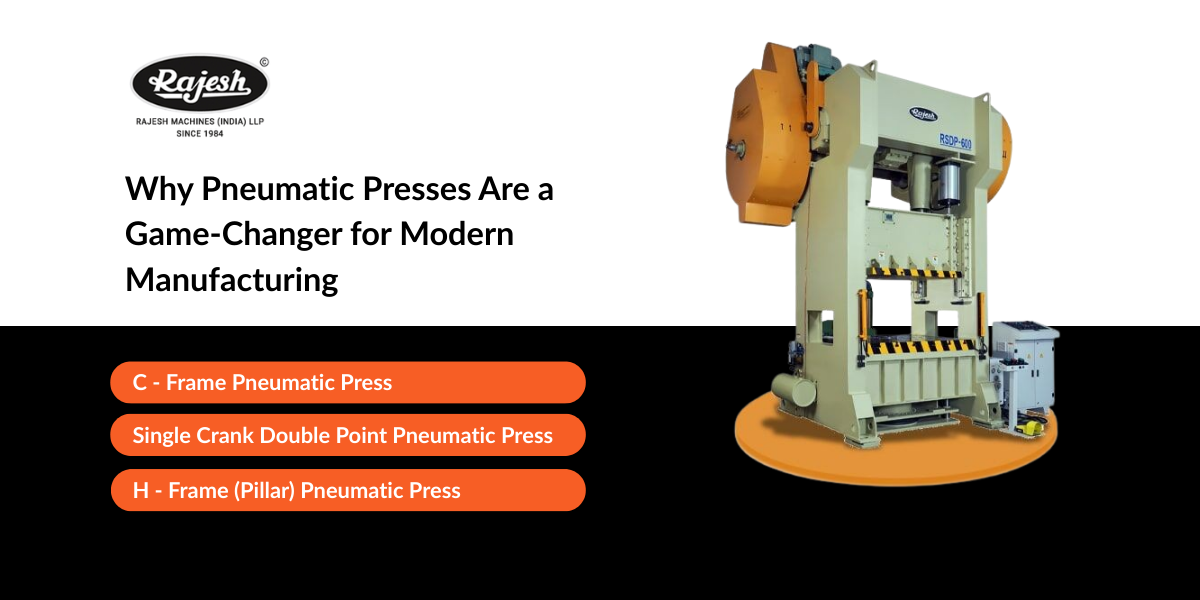
C-Frame Design:
Its C-Frame Pneumatic Press features an open front design that provides ease of access to the area of work. This layout is suitable for jobs that require frequent loading and unloading of materials. The C-frame offers accessibility and visibility, while also maintaining the structural integrity of press operations.
Double Point Configuration:
A Single Crank Double Point Pneumatic Press distributes force over two points, providing the application of pressure evenly. This design is ideal for larger pieces of work that require an even distribution of force to avoid stretching or unevenly forming.
H-Frame Structure:
The H-Frame (Pillar) Pneumatic Press provides the highest stability due to its four-pillar construction. This configuration is able to handle larger quantities of tonnage, while maintaining the same precision. The frame’s rigidity prevents the pressing process from deflecting and ensures consistency in outcomes.
Shop Pneumatic Press Machines from Rajesh Machine
The quality of equipment is the basis of manufacturing operations that are reliable. Rajesh Machine has developed expertise in the production of pneumatic presses that are in line with international standards and are affordable for companies of any size.
Picking the right partner guarantees not only the best equipment, but also continuous assistance for installation, training and maintenance. When looking at pneumatic presses take note of these important aspects:
- Build quality and structural integrity
- Available tonnage ranges for your applications
- Customization capabilities for specific needs
- Spare parts availability and delivery times
- Technical support responsiveness and expertise
- Warranty coverage and after-sales service
- Installation and training support
These elements determine long-term satisfaction and production reliability beyond the initial purchase decision.
Ready to Transform Your Manufacturing Operations?
Stop losing production time to slow, unreliable equipment. Pneumatic presses from trusted power press manufacturers in India deliver the speed, precision, and dependability your operation needs to stay competitive.
Conclusion
Pneumatic presses are continuing to transform manufacturing processes through their combination with speed, accuracy as well as cost effectiveness. Their simple, yet effective design minimizes the need for maintenance and delivers consistent results over many thousands of operations. The financial benefits extend across the life of the equipment starting with lower cost of purchase to lower operational expenses. If manufacturers require efficient pressing solutions that aren’t prone to the complicated hydraulic system, then pneumatic technology is the solution. For companies looking to maximize their processes for pressing – pneumatic presses are an effective solution that is practical and efficient.
Frequently Asked Questions
Pneumatic presses provide faster cycles, easier cleaning, as well as lower expenses. They are suitable for medium to light-duty tasks where speed and cleanliness are crucial more than the force that is maximum.
Pneumatic presses generally produce forces ranging from a few tons up to moderate levels of tonnage, based on the model. This covers the majority of manufacturing, assembly and stamping processes within modern production.
Automotive, electronics, plastics, metal fabrication, and packaging industries use pneumatic presses extensively. Any sector requiring repetitive pressing operations with consistent quality benefits from this technology.
Maintenance remains straightforward with regular air filter changes, lubrication of moving parts, and periodic inspection of seals and valves. Most facilities handle maintenance in-house without specialized technicians.
Pneumatic presses work best for light to medium-duty applications. For heavy-duty metal forming requiring extremely high force, hydraulic or mechanical presses might suit the application better.