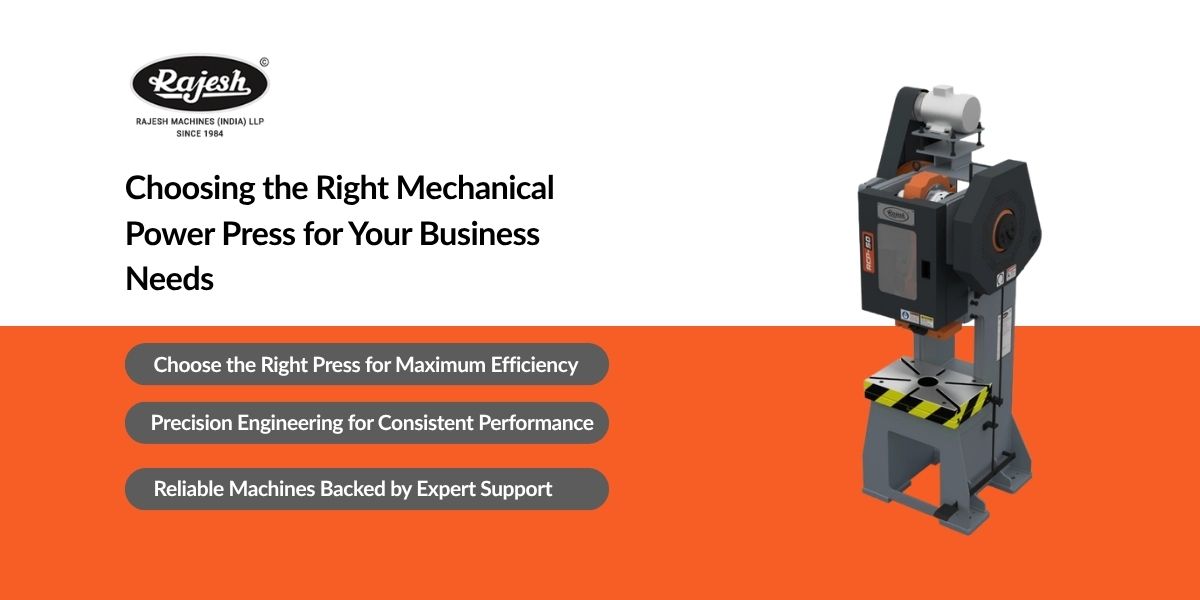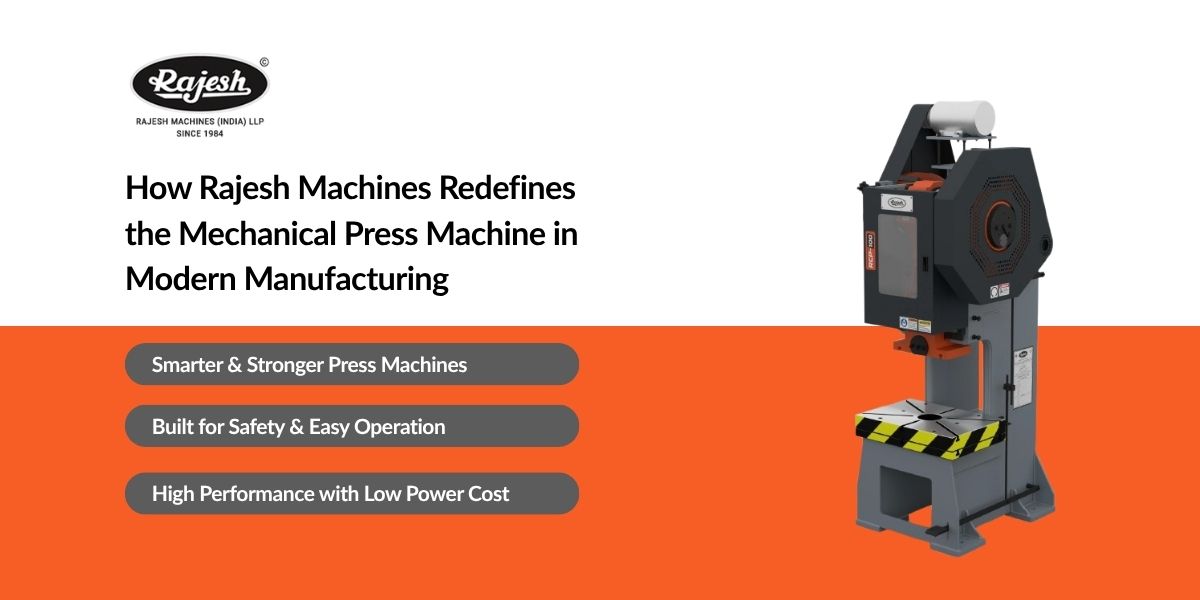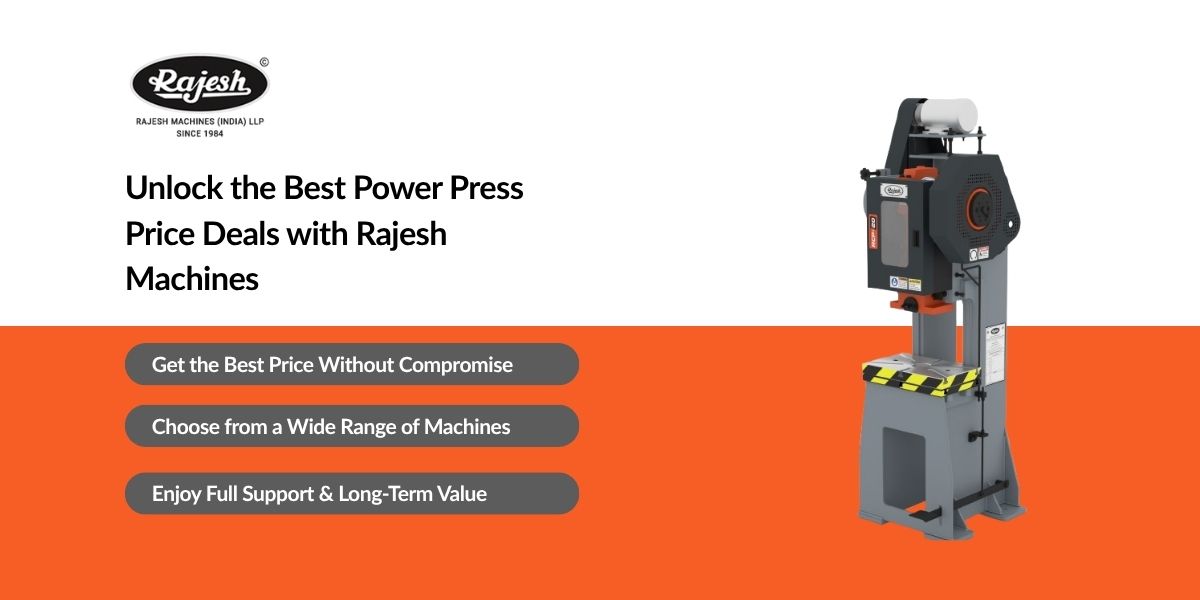
What is a Mechanical Press Machine?
An industrial machine of this type that runs high-speed, repeated production operations using mechanical energy is a mechanical press machine. The primary goal is to shape, cut, or press a material into the intended form by applying a specified force amount. The press machine runs by turning rotational energy from a motor into linear motion, which is applied via a ram—also called a slide. A flywheel storing kinetic energy and passing it through a clutch powers the machine. Mechanical press machines are a frequent alternative for companies wanting high-volume production with reliable outcomes because of their speed and efficiency.How Does a Mechanical Press Machine Work?
A mechanical press operates on the conversion of energy kept in a flywheel into a pressing force. These are the fundamental components of a mechanical press machine and their purposes:
- Flywheel: Acts as the primary energy storage unit. It rotates continuously and delivers energy when required.
- Clutch and Brake System: The clutch engages the flywheel to transfer energy to the ram. The brake stops the motion of the ram after the pressing action.
- Ram (or Slide): The moving part that applies force to the material. It moves vertically and interacts with the die and workpiece.
- Die:A specially designed tool that helps shape the material during the pressing process.
- Frame and Bolster Plate: Provide structural support and stability during operation.
The process begins with the motor driving the flywheel, which spins continuously. When activated, the clutch connects the flywheel to the crankshaft, transferring energy to the ram. The ram moves downward to exert pressure on the workpiece, completing the required operation.
Applications of Mechanical Press Machines
Mechanical press machines are very versatile and used in a variety of industries. Here are some of their most common applications:
- Metal Stamping: Producing automotive components, electronic parts, and appliance panels.
- Punching: Creating holes in metal sheets or other materials.
- Bending: Forming metal sheets into desired angles or shapes.
- Coining: Manufacturing coins, medallions, and other precision-stamped items.
- Embossing: Adding intricate patterns or textures to metal surfaces for aesthetic purposes.
These applications demonstrate the essential role that mechanical press machines play in modern manufacturing processes.
Benefits of Mechanical Press Machines
Mechanical press machines offer a wide range of benefits, making them the preferred choice for various industries:- High Speed and Productivity: Mechanical presses operate at a faster rate than hydraulic presses, making them ideal for high-volume production.
- Precision and Consistency: They provide uniform force with each stroke, guaranteeing consistent quality in bulk production.
- Cost-Effectiveness: Reduced energy usage and minimum maintenance need to render them a cost-effective choice.
- Durability and Longevity: Mechanical press machines are robust and designed to handle heavy-duty operations over extended periods.
- Automation Integration: These machines can be integrated with automation systems like feeds and conveyors to improve efficiency.
Mechanical Press Machine vs. Hydraulic Press
Mechanical press machines are built for high-speed, repetitive activities and provide fast and consistent force, making them suitable for stamping, punching, and bending. They are efficient in high-volume settings because of their quick cycle times and minimal maintenance costs. On the other hand, hydraulic presses offer better adaptability in uses requiring accuracy or working with various materials since they use changing force. Though they run slower, hydraulic presses are better suited for larger or more complicated materials and jobs requiring different degrees of power. Read our complete article here for a thorough comparison and to know which press machine fits your requirements.What is the difference between Mechanical and Hydraulic Press?
Key Considerations When Choosing a Mechanical Press Machine
To make sure a mechanical press machinewill satisfy your manufacturing needs, it’s important to consider the following considerations before investing:- Tonnage Capacity: The maximum force the press can exert. This depends on the type of material and the operation.
- Stroke Length: The vertical distance the ram travels during operation.
- Bed Size: Specifies the size of the workpiece that can be treated.
- Automation Features: Specifies the size of the workpiece that can be treated.
- Safety Features: Safety guards, sensors, and emergency stops are necessary for operator safety.
Why Are Mechanical Press Machines Essential in Manufacturing?
Mechanical press machines have become indispensable in the manufacturing sector due to their ability to execute high-speed operations with precision. Industries such as automotive, aerospace, electronics, and construction rely heavily on these machines to produce components at scale while maintaining quality. From stamping vehicle parts to creating intricate electrical components, mechanical presses drive industrial innovation.
Conclusion
By understanding the working mechanism, applications, and advantages of a mechanical press machine, businesses can make informed decisions and optimize their production processes. Whether you’re in the automotive, aerospace, or metal fabrication industry, investing in the right mechanical press machine can drive efficiency and scalability.
At Rajesh Group, we take pride in being one of the best manufacturers of mechanical press machines. With over 40 years of experience in the industry, we have established ourselves as a global leader in the manufacturing and supply of high-quality mechanical presses. Our machines are trusted by businesses around the world for their durability, efficiency, and precision. We are proud of our legacy and committed to providing the best mechanical press solutions to meet the evolving needs of industries worldwide.
FAQ's
A Mechanical Press Machine uses mechanical energy to shape, cut, or form materials like metal through a ram that applies force to the material.
They are used in industries like automotive, aerospace, electronics, and construction for stamping, punching, bending, and coining materials.
Mechanical Presses use a flywheel for speed and fixed force, while hydraulic presses use fluid for adjustable force and slower operations.
Consider tonnage capacity, stroke length, bed size, and automation needs when selecting a machine.
It converts rotational energy from a motor into linear motion, applying force to materials through a ram for operations like punching or bending.