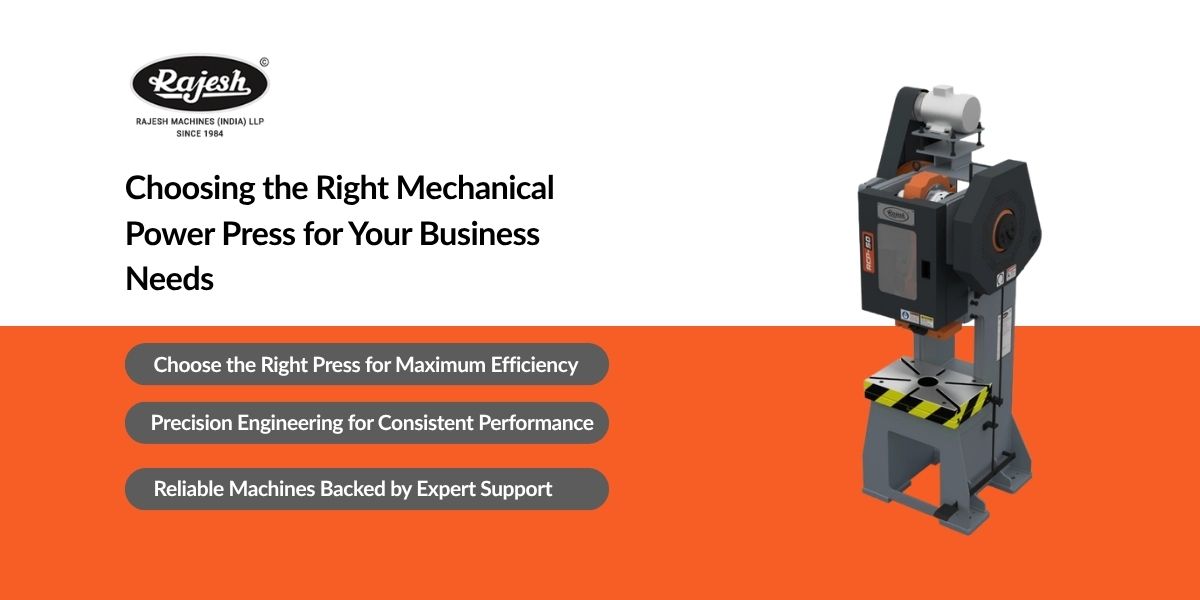
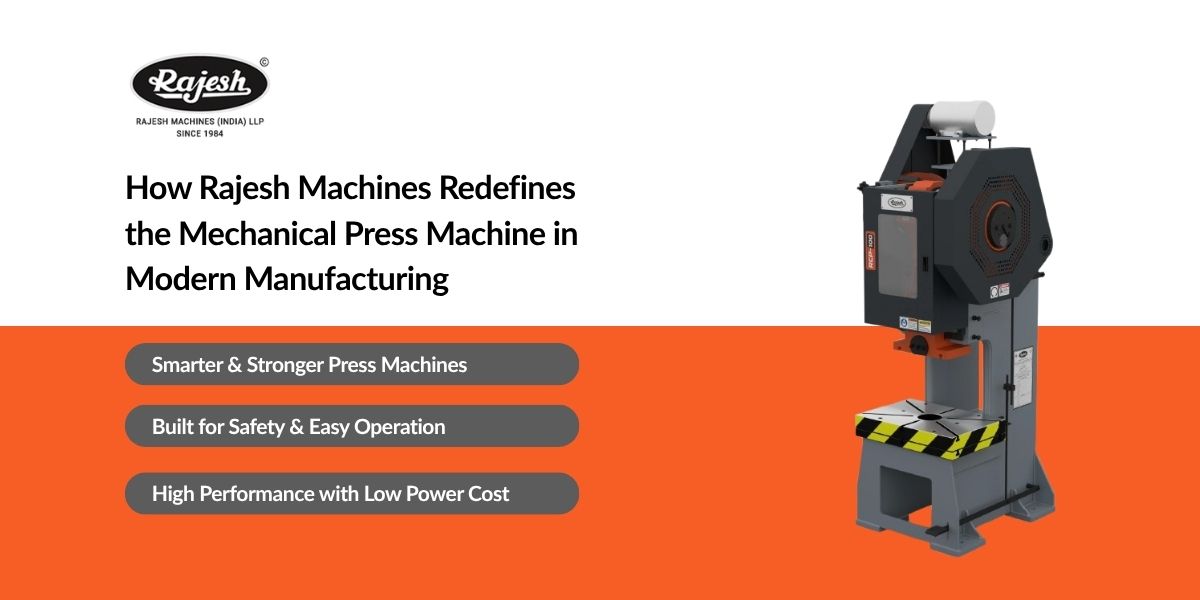
When buying a press, you have several options, including manual, pneumatic, hydraulic, and hydropneumatic presses. Manufacturing companies commonly use pneumatic presses as heavy-duty industrial machines for deforming workpieces.
Factors to Consider:
1. Type of Power Press Machine
Hydraulic press, pneumatic press, and mechanical power press machines are among the numerous types. You’ll need to select a certain kind of machine according to your requirements and the materials you’ll be operating with. Heavy-duty operations can be completed with mechanical power press machines, which are also durable. For precise work and the ability to handle a variety of materials, hydraulic power press machines are the best. The finest option for light-duty work and the simplest to use is pneumatic power press machines.
2. Tonnage Capacity
The amount of pressure the machine can apply to the material depends on its tonnage capacity. The thickness and type of material you will indeed be working with will determine the capacity you require. The chosen machine should support the maximum thickness of the materials you’ll be working with.
3. Safety Features
It would be best to choose a machine with safety features like guards, emergency stop buttons, and two-hand controls to prevent accidents. A trustworthy control system that can guard against overloading and shield the operator from potential dangers should be included with the machine.
4. Automation
Pick a machine that can automate the pressing process to cut labor expenses and boost productivity. The device should feature a programmed controller capable of carrying out various operations like feeding, pressing, and unloading without the need for human intervention.
5. Cost
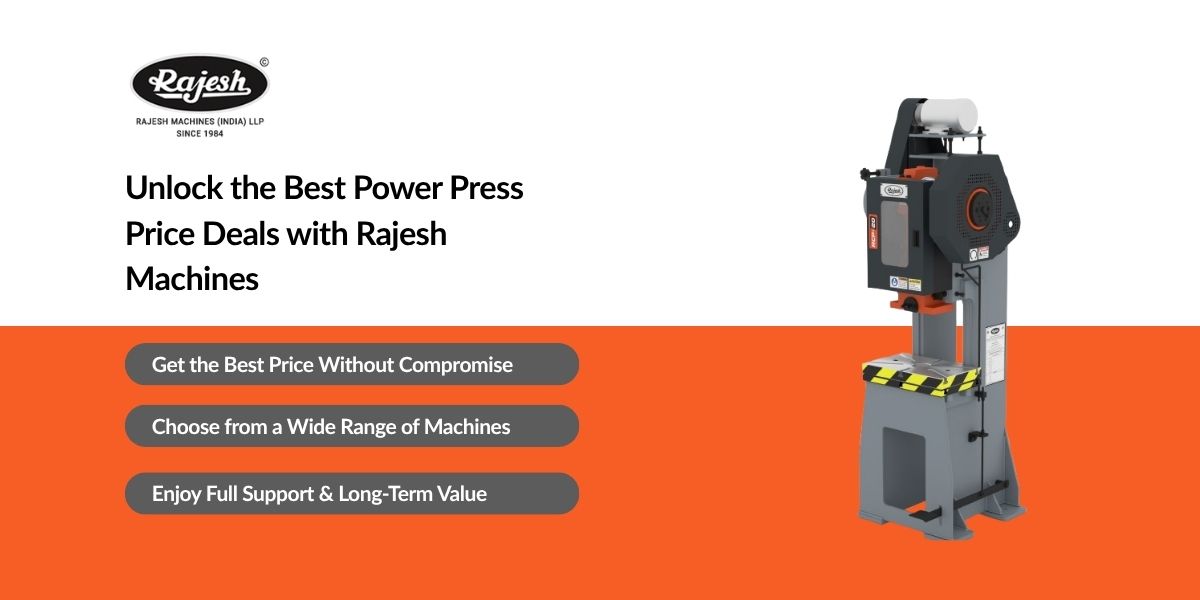
The machine that offers the best value for your money should fit your budget. The type, size, and features of the machine affect its price. It would help to compare different brands and models to choose the most affordable option. Rajesh machine provides the best price for a power press machine.
6. Size and Composition of the Workpiece
The machine should be able to handle the size and weight of the material you’ll be using. The size of the workpiece should be able to fit within the machine’s stroke length and column space. In addition, the machine must be able to put the required force on the material without damaging it.
7. Maintenance and Durability
A machine with low maintenance needs and a long lifetime is what you should go with. High-quality components must be used in the machine’s construction and must be built to handle demanding tasks. Also, it must include parts that are simple to access for maintenance and repairs.
8. Reputation and Brand
While selecting a power press machine, you must consider the manufacturer’s name and reputation. Choose a well-known company with a history of having high devices. Rajesh machines provide the best power press machines in India. Rajesh Machine Toolshas 36 years of expertise in this field. Visit our website for more information about us.
9. Customer Support
The manufacturer should offer top-notch technical support and customer service to address any problems that might arise while the machine is in use.
Therefore, selecting the idealpower press machine is an important choice that can significantly affect your company’s profitability. To choose the best power press machine, consider these factors. You can increase productivity, cut costs, and expand your company with the right equipment.