Introduction
Precision metal cutting meets robust engineering to form a mechanical under crank shearing machine-an impressive tool that has revolutionized sheet metal fabrication across industries. If you have ever wondered how manufacturers achieve clean cuts through thick metal sheets effortlessly, now you know it’s all thanks to technology!
Understanding the Mechanical Under Crank Shearing Machine
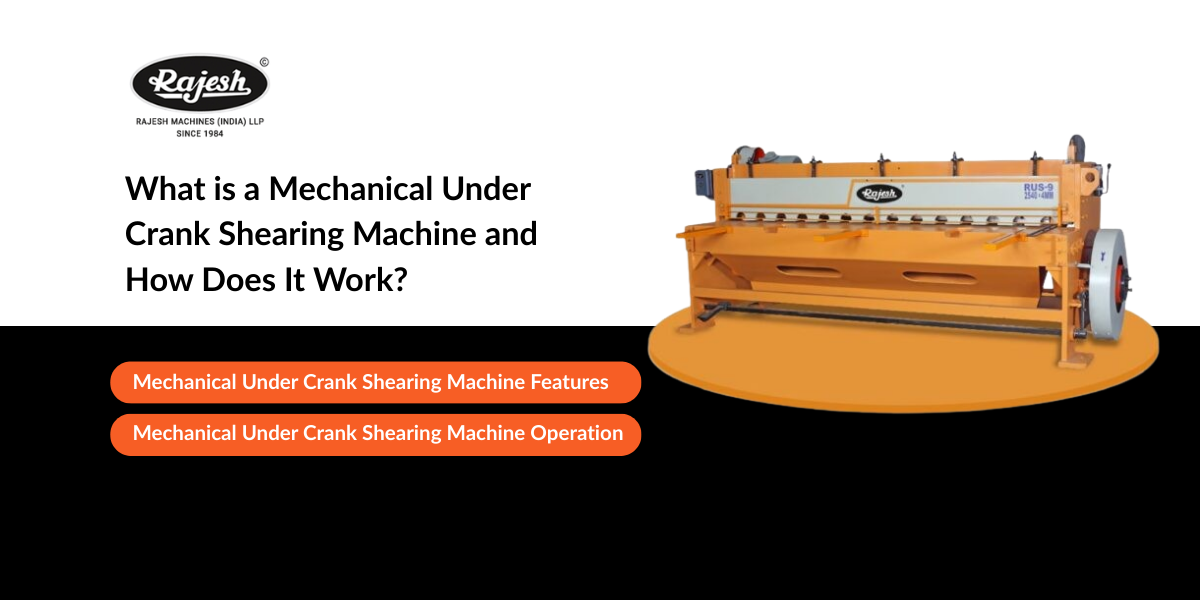
Mechanical Under Crank Shearing Machine is industrial tools specially designed to cut sheet metal with extraordinary precision and efficiency. Unlike standard shearing machines, this equipment features an innovative under-crank mechanism which places its driving crankshaft below the machine table – creating a low profile design that improves stability during operation.
This machine operates on pure mechanical power, converting rotational motion from a flywheel into linear cutting force. The “under crank” designation refers to the placement of the eccentric shaft beneath the cutting blade assembly, which gives operators better visibility and control over the cutting process.
How Does a Mechanical Under Crank Shearing Machine Work?
This machine combines simple mechanics with powerful results. To begin with, an electric motor powers a flywheel which stores kinetic energy. When activated, this energy transfers via an under-mounted crankshaft which converts its rotational motion into vertical movement. The crankshaft connects to the upper blade through a connecting rod system similar to what pistons would use in an engine engine.
As the upper blade lowers, it collides with the fixed lower blade with tremendous force concentrated along a narrow cutting edge, meeting it head on with immense force that creates shear stress that exceeds material strength and results in clean separation of metal sheets positioned between these two blades. Once this cycle completes in seconds, its blade automatically returns back into its starting position, ready for another cut.
Back gauge systems on this machine enable operators to position materials precisely, creating consistent cut lengths across multiple pieces. Foot pedal controls enable hands-free material guidance, while adjustable blade gaps accommodate differing material thicknesses.
Key Components That Make It Work
- Flywheel and Motor Assembly
The heart of the machine stores and releases energy for each cutting stroke. The heavy flywheel maintains momentum between cuts, ensuring consistent performance throughout every operation cycle.
- Under Crank Mechanism
Positioned beneath the work table, this system transforms circular motion into the powerful vertical force needed for shearing. Its low placement reduces vibration and increases cutting accuracy, making it the defining feature of this machine type.
- Blade System
The upper and lower blades form a scissor-like action when used together, utilizing hardened tool steel blades made to maintain sharp edges through thousands of cutting cycles, for clean cuts without burring or distortion.
- Back Gauge
This adjustable fence system positions your material precisely, enabling multiple cuts at identical measurements without manually measuring. It is an invaluable asset in production environments where consistent results matter.
- Table and Support Structure
A rigid cast iron base absorbs cutting forces and prevents deflection to maintain accuracy even when cutting thick materials. This robust construction keeps the machine stable even in demanding conditions.
Industries That Rely on Mechanical Under Crank Shearing Machines
Manufacturers across diverse sectors depend on these machines for their daily operations:
- Automotive Workshops can fabricate body panels and chassis components;
- Construction companies cut structural steel members for roofing;
- HVAC Contractors shape ductwork with precision; HVAC Contracting is often utilized as well.
- Finally, Electronic manufacturers prepare metal enclosures and brackets.
- Furniture Makers cut metal frames and add decorative components.
The versatility of mechanical under crank shearing machines makes them indispensable wherever metal fabrication occurs. Their ability to handle various materials—from soft aluminum to hardened stainless steel—means one machine serves multiple production needs.
Advantages That Set This Machine Apart
The mechanical under crank design offers distinct benefits over other cutting methods. The under crank configuration provides exceptional stability, reducing vibration that can compromise cut quality. You see better accuracy because the machine’s low center of gravity keeps everything steady during operation.
Maintenance requirements stay minimal compared to hydraulic alternatives. With fewer components and no hydraulic fluids to monitor, these machines run reliably for years with basic care. The mechanical drive system delivers consistent cutting force regardless of how long the machine operates, unlike hydraulic systems that can experience pressure variations.
Energy efficiency stands out as another major advantage. The flywheel stores energy between cuts, meaning the motor only runs to replenish what’s used during shearing. This intermittent operation consumes less power than continuous-duty systems.
The simplicity of mechanical operation also means faster operator training. New workers quickly master the straightforward controls, getting production up to speed without extensive technical education.
For a deeper look at why these machines excel, explore the advantages of shearing machines in modern fabrication.
Shop Mechanical Under Crank Shearing Machine from Rajesh Machine
When you need reliable metal cutting equipment backed by decades of engineering expertise, Rajesh Power Press India delivers machines built to last. Our mechanical under crank shearing machines combine time-tested mechanical principles with modern manufacturing quality, giving you tools that perform consistently year after year.
For Fabrication Shop Solutions, we understand the varying needs of every fabrication shop are different. That is why our range includes models tailored specifically to small workshops as well as heavy industrial operations to provide exactly the capacity you require without overpaying for excessive capacity. Each machine undergoes rigorous testing at our factory before leaving our premises to ensure you receive equipment ready for immediate production..
Visit Rajesh Power Press India to explore our complete range of mechanical under crank shearing machines and discover which model fits your fabrication needs perfectly.
Safety Considerations for Operators
Operating a mechanical under crank shearing machine demands respect for its cutting power and attention to safety protocols. The machine’s ability to shear thick steel means it can easily cause severe injury if used carelessly.
Always keep your hands clear of the cutting zone when the blade is in motion. Use the back gauge and material guides to position sheets without reaching into danger areas. The foot pedal control system exists specifically to keep your hands away from the blade during operation.
Never bypass safety guards or interlocks. These features prevent blade cycling when covers are open or obstacles enter a cutting path; disabling them saves seconds but could potentially result in serious injury.
Essential Safety Equipment:
- Safety glasses provide protection from flying metal fragments
- Hearing protection for noise reduction during operation
- While steel-toed boots protect from falling sheets of metal
- Work gloves should also be worn when handling sharp-edged materials
Maintain a clean working area around your machine. Metal scraps strewn across the floor can create dangerous trip hazards when handling large sheets that limit visibility, so keep cutting oil or any other potentially slippery substances out of foot pedal areas.
Before permitting independent machine use, operators training should take place. Understanding its capabilities, limitations, and emergency procedures helps avoid accidents that could endanger both workers and equipment.
Get the Best Mechanical Under Crank Shearing Machine for Your Workshop
Transform your metal cutting operations with precision machinery built to industrial standards. Rajesh Power Press India delivers mechanical under-crank shearing machines that combine reliable performance with exceptional value.
Conclusion
Mechanical under-crank shearing machine serve as the cornerstone of modern metal fabrication, offering precision, reliability and cost-efficiency in equal measure. With its distinctive under-crank design that minimises vibration while increasing accuracy of cutting, this machine is the go-to option for workshops ranging from small operations to larger industrial facilities. With minimal maintenance requirements and energy-efficient operation, as well as its ability to process diverse materials ranging from aluminum to hardened steel, this machine proves its worth with every cut made. No matter whether you specialize in fabricating automotive components, construction materials or custom metalwork – investing in quality mechanical under-crank shearing machine from respected suppliers like Rajesh Power Press India ensures smooth operations for years.
Frequently Asked Questions
These machines can handle most common metals such as mild steel, stainless steel, aluminum, copper, and brass. Their maximum thickness depends on material hardness and machine capacity.
Mechanical machines use flywheel-powered crankshafts for cutting force, while hydraulic versions use pressurized oil cylinders. Mechanical models cost less and require minimal maintenance but offer limited flexibility.
Cutting capacity depends on blade length, maximum material thickness rating and motor power. Manufacturers usually specify cutting capacities based on mild steel; harder materials reduce effective thickness.
Blade life varies with usage intensity and materials cut. Professional sharpening extends life several times, with replacement typically needed after multiple sharpening cycles when proper edge geometry can't be restored.
Standard mechanical under crank shearing machines make straight cuts only. Specialized versions with adjustable blade angles can create beveled edges, but complex shapes require different equipment.