Introduction
The automotive industry runs on precision, speed and consistent quality. Each component of a vehicle, whether it be body panel or bracket comes with its own unique set of demands that leave no room for slip-ups. At the heart of this manufacturing process is power press stamping, which manufactures can flat metal sheets into functional automotive parts that millions of cars use every day.
The choice of the right press machine can be the difference between success and failure for an automotive production line. The incorrect decision results in delays to production, reduced product quality and unnecessary expenses. The right machine, in contrast, streamlines operations and delivers precision automotive manufacturing demands.
Understanding Power Press Stamping in Automotive Manufacturing
Power press stamping is the process of using mechanical force to form metal into shapes. The method consists in placing metal between a punch and die then adding tonnage to form as shaped. This method is used in the automotive industry to create high-quality parts reliably, and at low costs.
In modern automobiles, a large number of stamped components is used. Everything from door panels to hoods, fenders, chassis parts and structural reinforcements all begins as flat sheets of metal. Power presses form these materials according to the precise dimensions that engineers define, so every component fits perfectly into others components.
The automotive sector requires particular characteristics from power press stamping. Parts must meet strict dimensional tolerances, often within fractions of a millimeter. Surface finish quality matters significantly, especially for visible components. Repeatability ensures every part matches the previous one, maintaining consistent quality across production runs.
Key Power Press Stamping Processes Driving Automotive Manufacturing
Automotive stamping relies on fundamental processes that shape raw metal into functional components. Understanding these operations helps you select power press machines that match your production requirements perfectly.
1. Blanking
- Definition: Cutting of flat metal sheets into certain shapes and separates the desired part from surrounding material with one stroke
- Common Applications: Brackets, mounting plates, smaller structural parts, washers, flanges
- Machine Requirements: Sharp dies, sufficient shearing tonnage, precise die clearance
- Key Benefits: Minimal material waste, clean edges, high-speed production capability
- Best Practices: Progressive dies integrate with blanking and other functions to optimize processing & minimize handling time.
2. Drawing
- Definition: Transforms flat blanks into three-dimensional hollow shapes by pulling material over a die
- Common Applications: Oil pans, fuel tanks, body panels, door inners, wheel wells
- Machine Requirements: Adjustable cushion systems, precise blank holder pressure control, variable speed capability
- Key Benefits: Creates complex contours, maintains material integrity, produces seamless hollow components
- Best Practices: Multiple drawing stages for deep components prevent material failure while achieving final geometry
3. Bending
- Definition: Forms angles in flat or pre-formed metal without cutting or removing material
- Common Applications: Brackets, channels, structural reinforcements, frame components, mounting tabs
- Machine Requirements: Moderate tonnage, precise tooling alignment, springback compensation capability
- Key Benefits: No material removal, clean angles, versatile for simple to complex geometries
- Best Practices: Account for material springback through proper die design and servo press programming
4. Piercing
- Definition: Creates holes, slots, and cutouts by punching through material
- Common Applications: Mounting holes, ventilation openings, weight reduction cutouts, fastener locations
- Machine Requirements: Sharp punches, proper die clearance, consistent tonnage and alignment
- Key Benefits: Clean holes without secondary finishing, integrated with other operations, high precision
- Best Practices: Incorporate piercing stations in progressive dies for complete part processing in single strokes
Press Configurations: Choosing the Right Tool for the Job
Power press machines are available in different types and each of them have certain advantages for the automotive stamping process. Knowing these differences allows you to choose the machine that best fits your production needs.
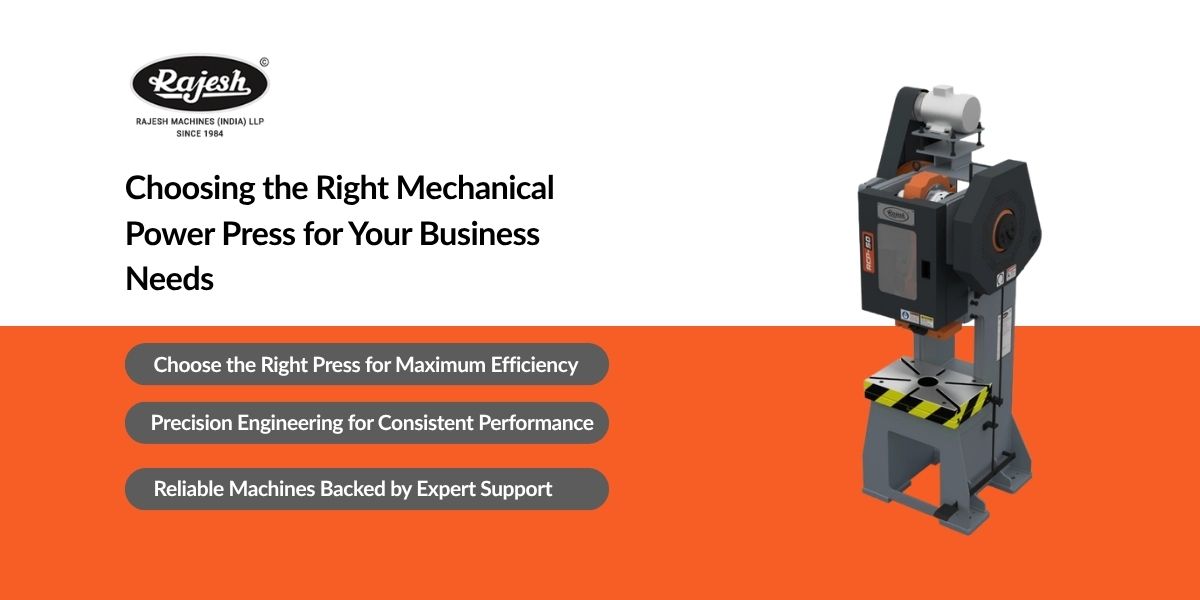
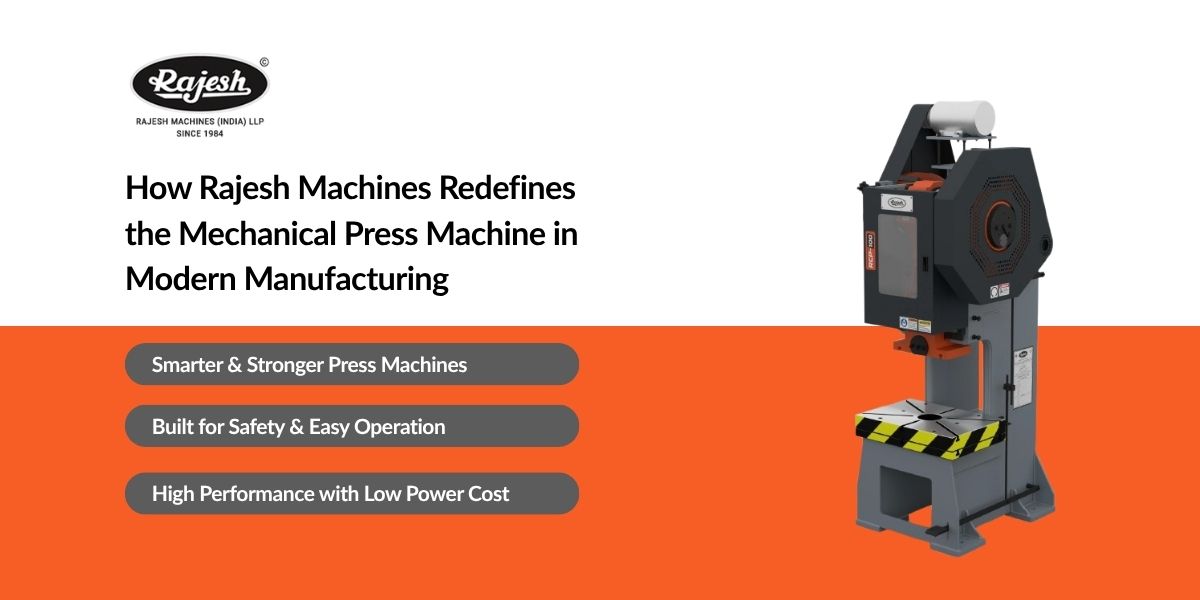
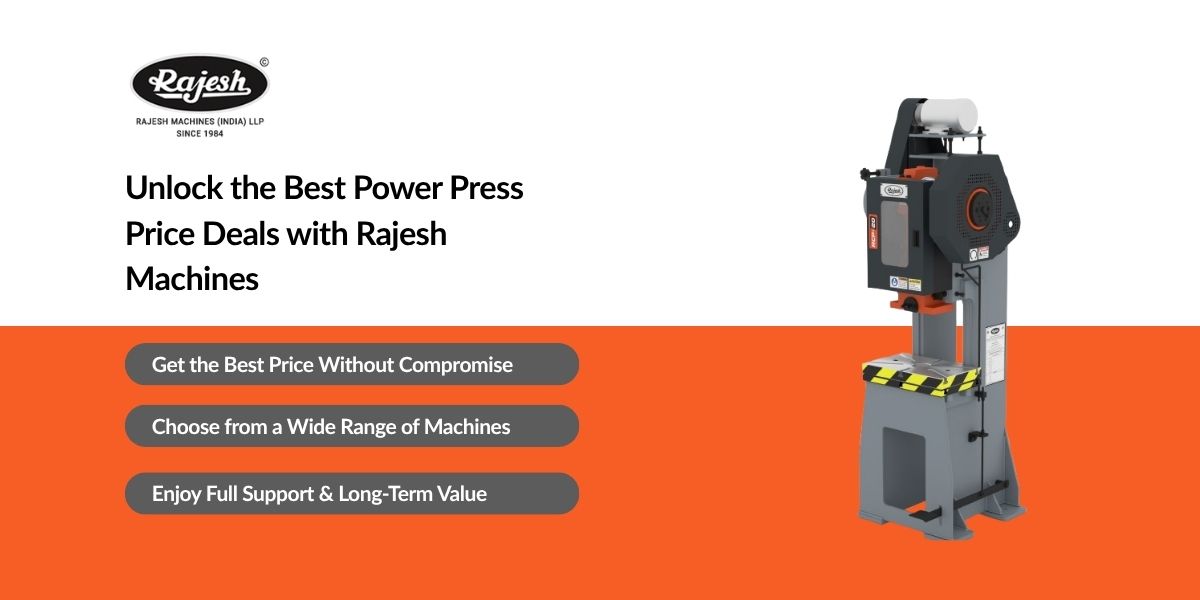
Press Type: Mechanical Presses (C‑Frame & H‑Frame)
- Key Characteristics:
High-speed mechanical action; rigid frame; available in pneumatic or standard variants; precise die alignment; tonnage range: 10–150T (C-Frame), 50–100T (H-Frame).
- Typical Automotive Applications:
Small to medium automotive components like brackets, clips, mounting plates, fasteners; larger structural components, chassis parts, light to medium sheet metal stamping.
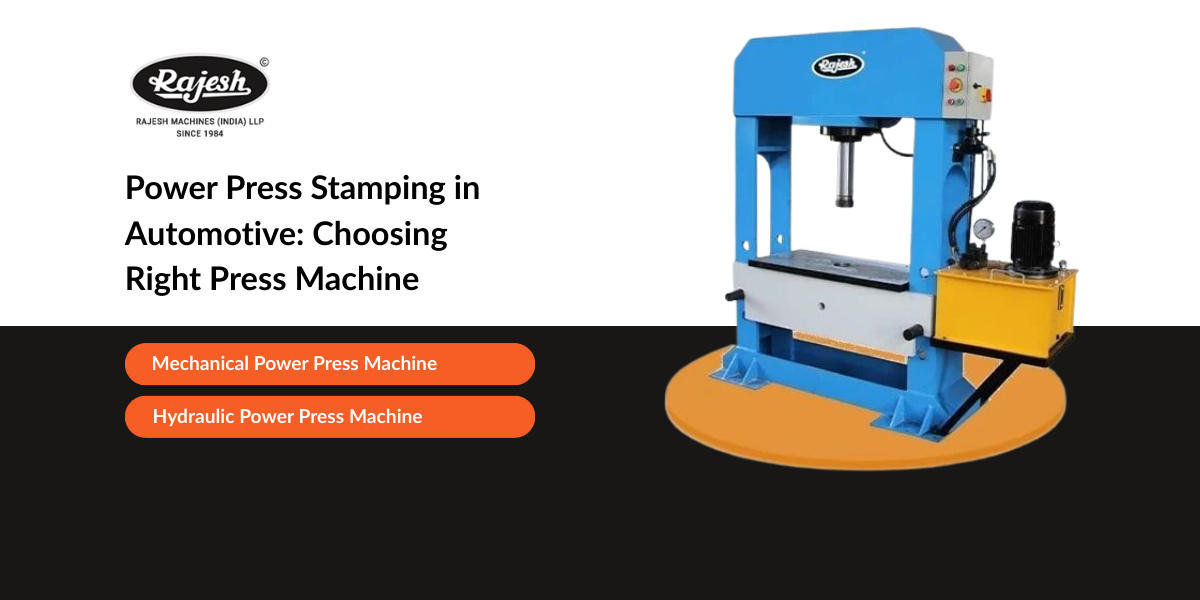
Press Type: Hydraulic Presses
- Key Characteristics:
Smooth force application; adjustable stroke length and tonnage; precise pressure control; ideal for deep drawing and forming; tonnage varies by model.
- Typical Automotive Applications:
Deep drawing operations, large body panels, fuel tanks, oil pans, structural components requiring high tonnage and precision forming.
Why every workshop should have a Rajesh Power Press machine explores additional benefits our equipment brings to manufacturing operations seeking competitive advantages.
Why Choose Rajesh Machines for Power Press Machines
There is simply no room for compromise in the quality and reliability of automotive production equipment. For lines that rely on reliable precision, selecting right power press manufacturers in India is critical for successful operations.
Rajesh Power Press India manufactures power press machines, which are customized and specially designed for automotive purposes. We have over decades of manufacturing expertise and refining designs based on real- world production feedback from automotive manufacturers. Our experience translates directly into machines which perform reliably under continuous operation cycles.
Ready to Transform Your Automotive Manufacturing?
Get precision power press machines that match your production ambitions perfectly.
Conclusion
Selecting the right power press machine transforms power press stamping in automotive manufacturing from production challenges into competitive advantages. Understanding these core processes, press configurations and line integration options enables making informed decisions that improve efficiency and quality. That’s why partner with experienced power press manufacturers who have a proven record of performance in automotive applications and give comprehensive support throughout the equipment operations.
Frequently Asked Questions
Power press stamping is a metal-forming process that uses controlled mechanical or hydraulic force to shape flat metal sheets into precise automotive components. It ensures high accuracy, repeatability, and mass production efficiency.
The automotive industry demands tight tolerances, consistent quality, and high production speed. Power press stamping meets these requirements by delivering uniform parts, clean finishes, and reliable output across large production volumes.
Common stamped automotive parts include body panels, doors, hoods, fenders, brackets, chassis components, structural reinforcements, and mounting plates.
Choosing the right power press depends on material thickness, part complexity, required tonnage, production volume, and stamping process type such as blanking, drawing, bending, or piercing.
Mechanical presses are ideal for high-speed blanking and piercing operations, while hydraulic presses offer precise force control and are better suited for deep drawing and complex forming of large automotive panels.